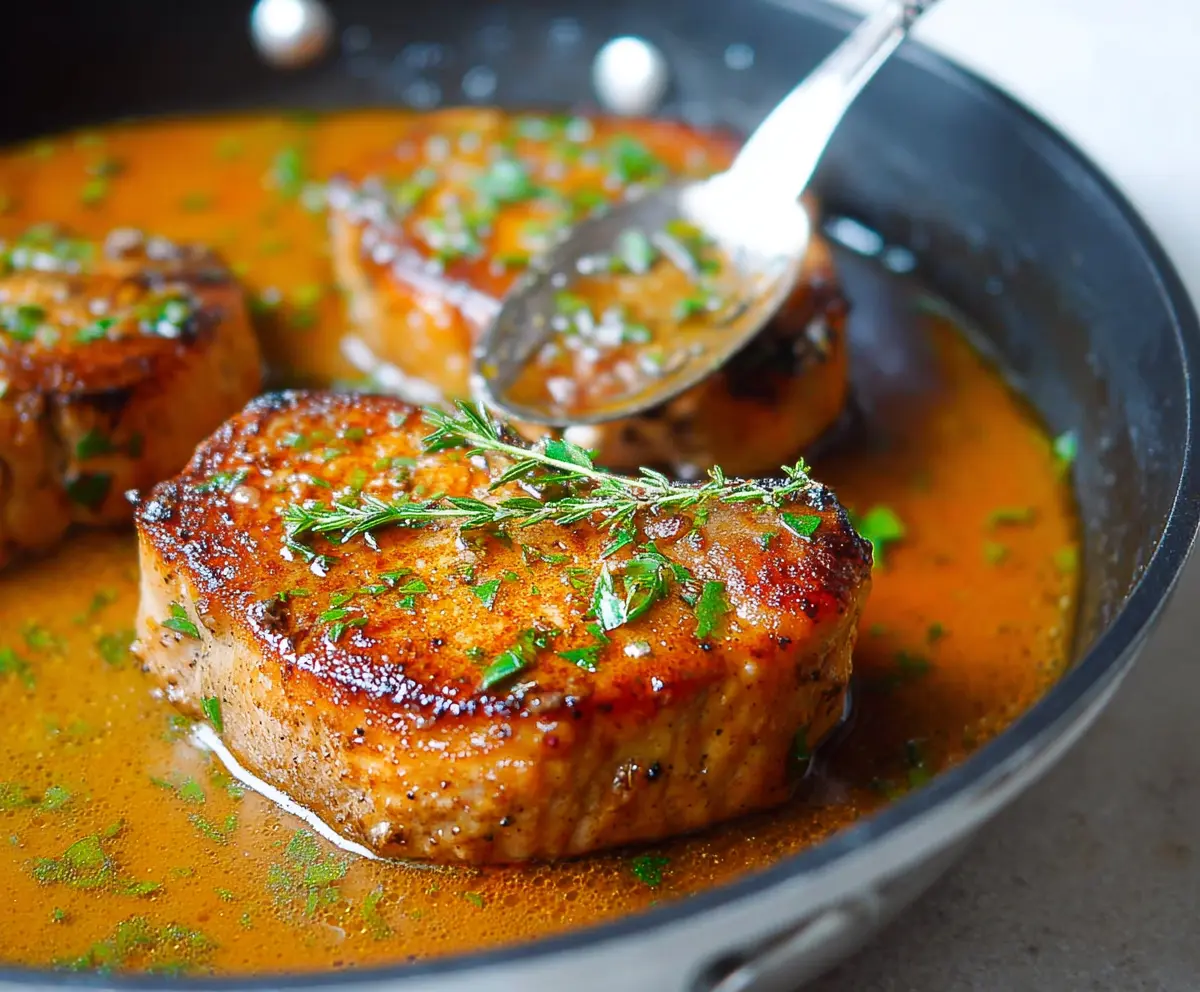
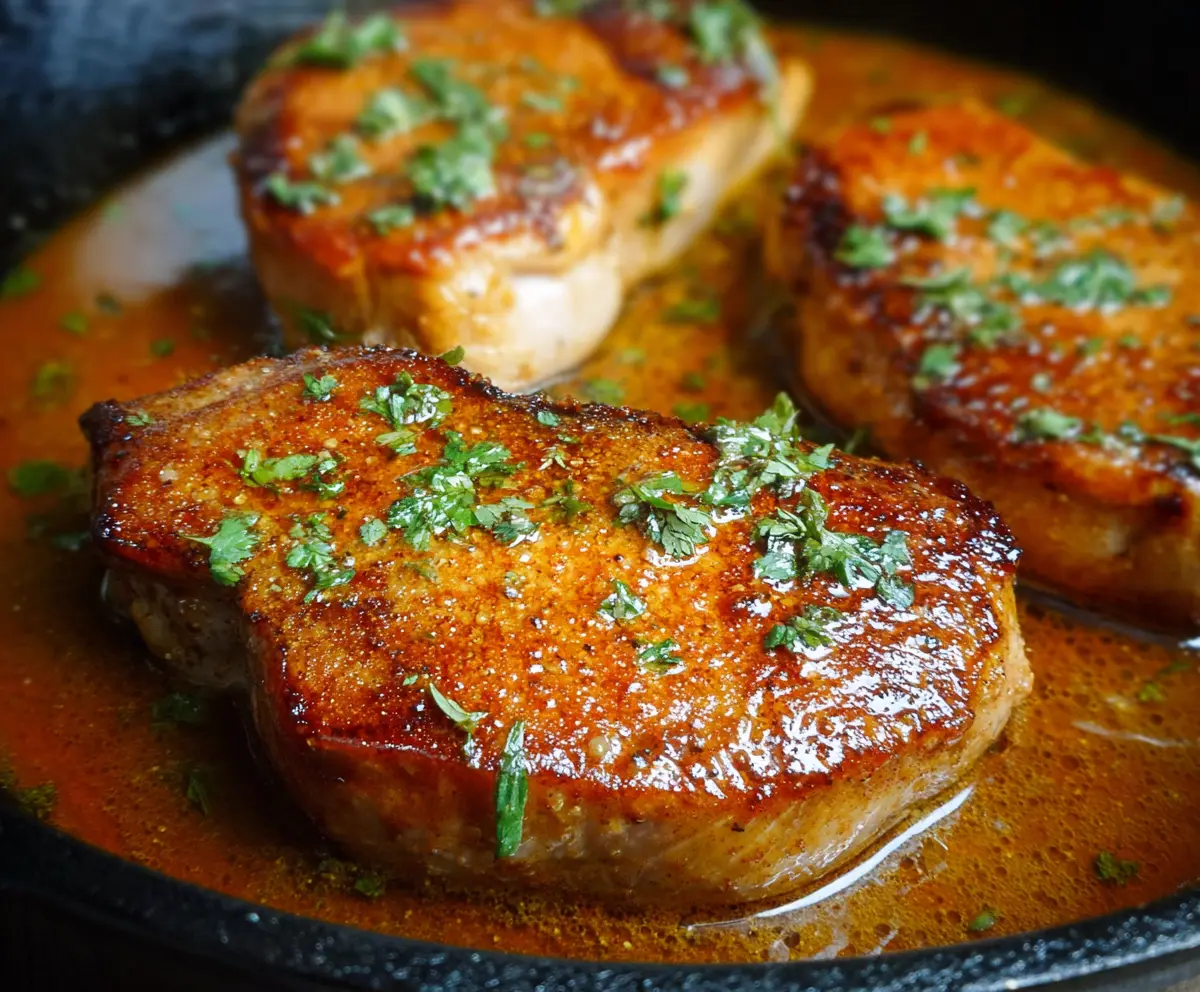
Juicy Pan Seared Pork Chops are all about that perfect golden crust on the outside with tender, flavorful meat inside. Cooking them in a hot pan gives the chops a crispy edge while keeping the inside moist and delicious. Simple seasonings like salt, pepper, and maybe a touch of garlic or herbs bring out the best in every bite.
I love making these pork chops because they come together so quickly, and you don’t need a ton of fancy ingredients. One of my favorite tricks is to let the chops rest a little after cooking to keep all those tasty juices locked in. It really makes a difference and leaves you with chops that feel more special than a weeknight dinner usually does.
These chops go great with just about anything—steamed veggies, mashed potatoes, or even a fresh salad. I’ve found that a squeeze of lemon or a dab of butter while they’re still warm really brightens the whole dish up, which is a simple touch that I always recommend. They’re perfect for both busy weeknights and weekend meals where you want something satisfying but not complicated.
Key Ingredients & Substitutions
Pork Chops: I like using bone-in chops because the bone adds flavor and helps keep the meat juicy. Boneless works fine too, just watch the cooking time as they can dry out quicker.
Butter & Oil: A mix of oil and butter gives a nice sear plus rich flavor. If you want a lighter option, try olive oil alone or avocado oil for a higher smoke point.
Herbs & Garlic: Fresh thyme or rosemary really lift the flavor, but dried herbs work if fresh aren’t available. Garlic adds warmth and depth; feel free to add more if you love garlic like I do.
Chicken Broth: This is used to make a quick pan sauce and adds moisture and flavor. You can swap with vegetable broth or even white wine for different tastes.
How Do I Get Perfectly Juicy Pork Chops Without Overcooking?
The key is cooking over medium-high heat and using a meat thermometer to check doneness. Here’s what I do:
- Let pork chops come to room temp before cooking—this helps them cook evenly.
- Pat them dry to get a better sear and golden crust.
- Sear without moving for 3-4 minutes per side to build flavor-packed crust.
- Baste with butter and herbs while cooking to add flavor and keep chops moist.
- Use a thermometer to aim for 145°F inside—the chops are safe and juicy here.
- Rest chops loosely covered for 5 minutes so juices settle back inside.
Following these steps locks in juiciness and prevents dry pork. Plus, the simple pan sauce brings the whole dish together beautifully!
Equipment You’ll Need
- Large skillet or cast-iron pan – I prefer a cast-iron skillet because it retains heat evenly for a crisp sear.
- Meat thermometer – helps you cook the pork to perfection without overdoing it.
- Tongs – makes flipping the chops easy and safe.
- Wood spoon or spatula – for scraping up browned bits when making the pan sauce.
- Small bowl – to mix or hold herbs and garlic for ready use.
Flavor Variations & Add-Ins
- Use apple cider vinegar or balsamic vinegar in the pan sauce for a tangy twist.
- Replace herbs with sage or oregano for different aroma profiles.
- Add sliced mushrooms or onions to the skillet for an extra layer of flavor and texture.
- Swap chicken broth with white wine or apple juice for a subtly different sauce.
How to Make Juicy Pan Seared Pork Chops
Ingredients You’ll Need:
Main Ingredients:
- 4 bone-in or boneless pork chops (about 1-inch thick)
- Salt, to taste
- Freshly ground black pepper, to taste
- 2 tbsp olive oil or vegetable oil
For the Sauce and Flavoring:
- 3 tbsp unsalted butter
- 3 cloves garlic, smashed
- 2-3 sprigs fresh thyme or rosemary
- ½ cup low-sodium chicken broth
- 1 tsp Dijon mustard (optional)
- Fresh parsley, chopped (for garnish)
How Much Time Will You Need?
This recipe takes about 10 minutes of active cooking time and 20-30 minutes to let the pork chops come to room temperature before cooking. Add another 5 minutes for resting the meat after cooking. In total, plan for about 35-45 minutes from start to finish.
Step-by-Step Instructions:
1. Prepare the Pork Chops:
Take the pork chops out of the fridge and let them sit at room temperature for about 20 to 30 minutes. This helps them cook evenly. Pat them dry with paper towels. Then season both sides generously with salt and freshly ground black pepper.
2. Sear the Pork Chops:
Heat olive oil in a large skillet over medium-high heat until it’s shimmering hot. Add the pork chops without crowding the pan. Cook without moving them for 3 to 4 minutes until a nice golden-brown crust forms.
3. Flip and Add Flavor:
Turn the pork chops over. Add the butter, smashed garlic cloves, and fresh thyme or rosemary sprigs to the pan. Tilt the pan slightly and spoon the melted butter over the pork chops repeatedly to baste them. Cook another 3 to 4 minutes, or until the internal temperature reaches 145°F (63°C).
4. Rest the Meat:
Remove the pork chops from the skillet and place them on a plate. Cover loosely with foil and let them rest for about 5 minutes. This keeps them juicy.
5. Make the Pan Sauce:
In the same skillet, add the chicken broth and Dijon mustard if you’re using it. Scrape up any browned bits stuck to the pan and let the sauce simmer gently for 2 to 3 minutes to reduce slightly.
6. Serve:
Remove the herb sprigs and garlic cloves from the sauce. Spoon the sauce over the rested pork chops. Sprinkle with freshly chopped parsley for a fresh touch, then serve immediately. Enjoy!
Can I Use Frozen Pork Chops for This Recipe?
Yes, but make sure to fully thaw them in the refrigerator overnight before cooking. Pat them dry well to get a good sear and avoid excess moisture in the pan.
How Should I Store Leftover Pork Chops?
Store leftovers in an airtight container in the fridge for up to 3 days. Reheat gently in a skillet over low heat or in the microwave to keep them juicy.
Can I Substitute the Herbs?
Absolutely! If you don’t have fresh thyme or rosemary, dried herbs work too—just use about one-third the amount and add them when you add the broth to the pan sauce.
What If I Don’t Have a Meat Thermometer?
Without a thermometer, cook the chops for about 3-4 minutes per side depending on thickness, then rest for 5 minutes. The meat should be firm but springy when pressed and the juices clear.